
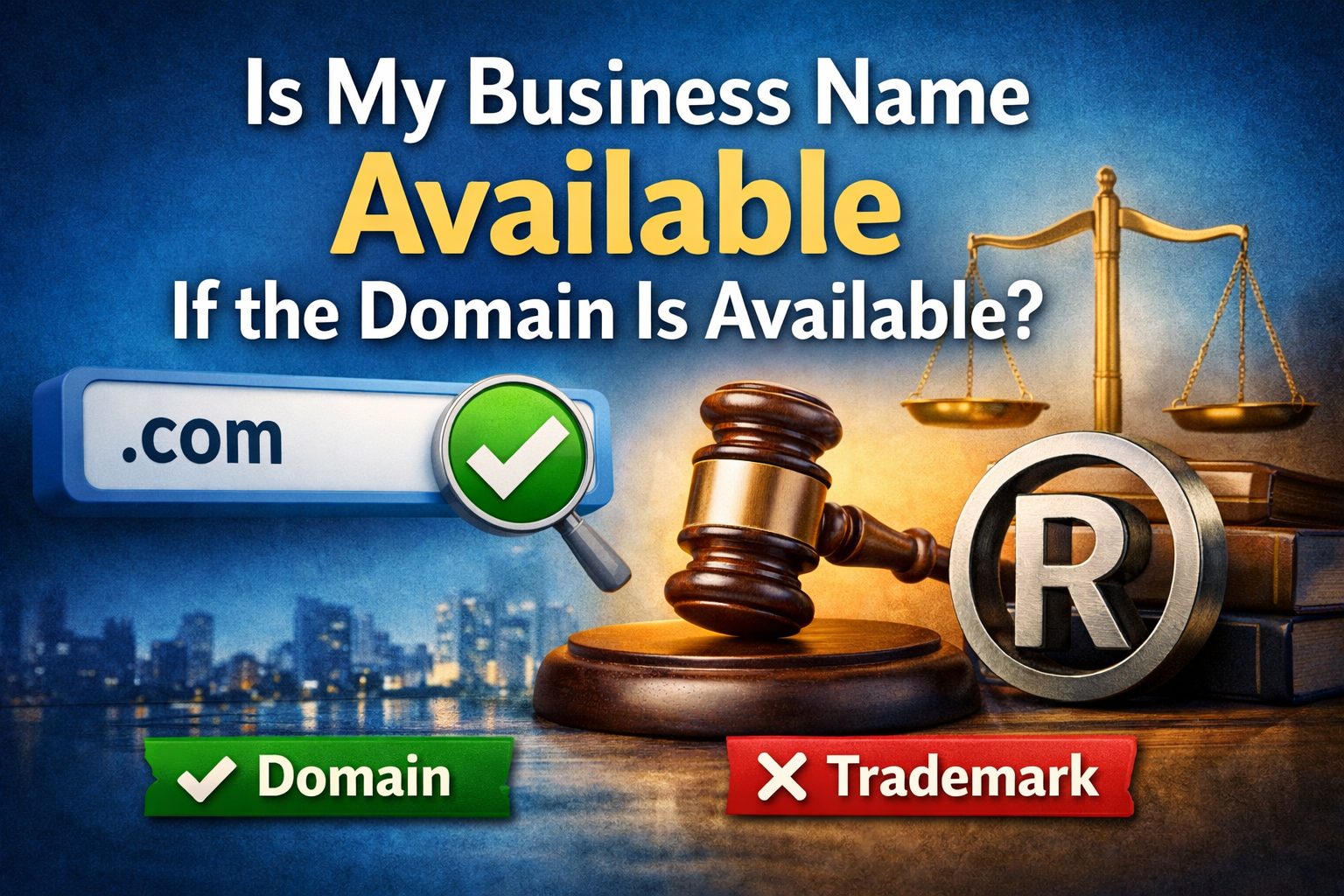
One of the most common mistakes business owners make when naming a company is assuming that domain availability means the name is legally available. It doesn’t. In fact, relying on domain searches alone is one of the fastest ways businesses end up rebranding, facing legal threats, or losing a name they already invested in.
Why Domain Availability Is Misleading
When you check whether a domain is available, you’re only answering one narrow question: has someone already registered that specific web address?
That’s it.
You are not checking whether someone owns trademark rights to the name. Domain registrars do not screen for trademarks, infringement, or legal conflicts. They only track who registered a URL first.
A business can legally own trademark rights to a name without owning the matching domain. In many cases, trademark owners don’t register every domain variation because trademark rights don’t depend on domain ownership.
Is My Business Name Available If the Domain Is Available? | Trademark vs Domain Name Explained
How Trademark Rights Actually Work
Trademarks protect names, logos, and branding elements used in commerce to identify the source of goods or services. Trademark rights arise through use, and federal registration strengthens those rights nationwide.
Trademark availability depends on factors such as:
- Existing trademark registrations
- Pending trademark applications
- Similar names used in related industries
- Likelihood of consumer confusion
None of this is reflected in a domain search.
That’s why a name can appear “available” online while still being legally unavailable under trademark law.
The Common Scenario That Gets Businesses in Trouble
This happens every day:
A business owner finds an available domain, forms an LLC, designs a logo, builds a website, and starts marketing. Everything feels official—until a cease and desist letter arrives.
At that point, owning the domain doesn’t matter. If another company owns prior trademark rights, they can force the business to stop using the name, take down the website, and rebrand entirely.
The domain does not protect you from trademark infringement claims.
Why LLC Name Approval Doesn’t Help Either
Many business owners assume that if the state approved their LLC name, they’re safe. That’s another misconception.
State business registries only check for duplicate entity names within that state. They do not analyze trademark conflicts, federal registrations, or use in commerce. A name can pass a state check and still conflict with a federally protected trademark.
LLC formation protects liability—not brand ownership.
What Actually Determines Whether a Name Is Available
The only way to know whether a business name is truly available is through a trademark clearance search. A proper search goes beyond exact matches and looks for:
- Similar spellings
- Similar sounding names
- Related goods and services
- Existing registrations and applications
- Common law use that could create conflicts
This analysis helps determine whether using the name is likely to cause confusion—and whether it’s safe to build a brand around it.
Why This Matters Even for Small or Local Businesses
Many small business owners assume trademarks only matter for national companies. That’s no longer true.
Even local businesses:
- Appear online
- Compete in search results
- Use social media
- Offer services across state lines
The moment your business has an online presence, trademark risk increases. Someone else can claim rights to a name and block your growth—even if you started locally.
The Real Cost of Getting It Wrong
The real damage isn’t the filing fee—it’s everything that comes after:
- Rebuilding a website
- Changing logos and signage
- Losing brand recognition
- Confusing customers
- Wasted marketing spend
- Delayed growth
Most of these costs far exceed what it would have taken to check the name properly at the beginning.
The Bottom Line
Domain availability does not equal trademark availability. It does not mean:
- You own the name
- You can legally use the name
- You’re protected from infringement claims
Domains are marketing tools. Trademarks are legal rights.
If your business name matters to you, checking domain availability is only step one—and it’s not the most important one.
Before you commit to a name, invest in a proper trademark search and strategy. It’s the difference between building a brand you own and borrowing one you might have to give back.
FAQ: Domain Names vs. Trademarks
Is my business name available if the domain is available?
No. A domain search only tells you whether a URL is available to register. It does not tell you whether the name is available under trademark law.
What does domain availability actually mean?
It means no one registered that exact web address yet. It does not check trademark rights, infringement risk, or whether another business already uses the name.
Can someone own the trademark without owning the domain?
Yes. Trademark rights come from use in commerce and/or federal registration, not domain ownership. Many trademark owners never purchase the matching domain.
Does forming an LLC protect my business name?
Not in the trademark sense. LLC approval is a state-level check to prevent duplicate entity names in that state. It does not grant trademark rights.
If I bought the domain first, can I still get in trouble?
Yes. Domain ownership does not protect you from trademark infringement claims. A trademark owner can still force you to stop using the name.
How do I know if a name is trademark-safe?
You need a trademark clearance search. That search evaluates existing registrations, pending applications, and similar names that could create legal risk.
Why can a domain be available but the name still not be usable?
Because domains and trademarks are different systems. Domains are first-come, first-served URLs. Trademarks depend on prior use/registration and likelihood of confusion.
What should I do before branding and launching?
Run a clearance search first. Then buy the domain and handles after you know the name is legally workable.
“`
Nathan Moore is a trademark attorney and the founder of Moore Law PC and Moore Trademarks. He works with business owners, entrepreneurs, and growing brands nationwide to protect names, logos, and other brand assets before legal problems arise. Nathan’s practice focuses on trademark clearance, federal registration, ownership strategy, and enforcement—helping clients avoid costly rebrands and preventable disputes. Known for clear, practical guidance, he breaks down complex trademark law into advice business owners can actually use. Learn more at MooreTrademarks.com.

