
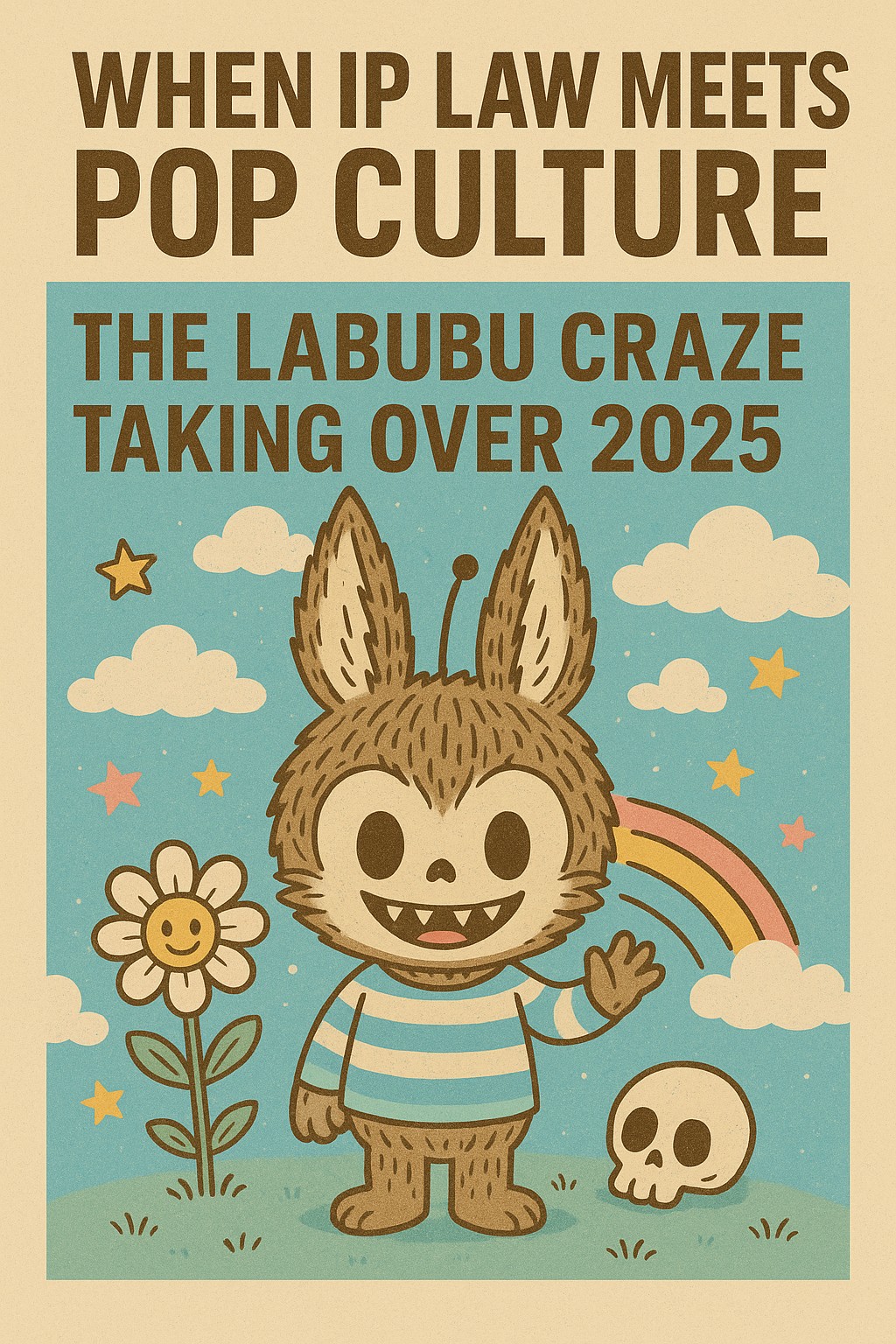
If you’ve scrolled Instagram, TikTok, or even the front row of Fashion Week lately, you’ve probably seen it—
A pointy-eared, wide-grinned little creature dangling from a luxury handbag.
Meet Labubu—the summer’s hottest collectible from Pop Mart, and now a case study in how intellectual property can fuel (and protect) a global trend.
🚀 From Indie Art to Global Status Symbol
Labubu was born in 2015 from the imagination of Hong Kong illustrator Kasing Lung.
Pop Mart picked it up in 2019, selling it in blind boxes—so you never know which figure you’ll get.
That simple scarcity model? It’s turned a $12 toy into a six-figure collectible.
A mint-green Labubu sold in Beijing for ¥1 million (~$140,000).
One $85 version resold on eBay for $10,500.
🌟 The Celebrity Effect
Things exploded when BLACKPINK’s Lisa posted a Labubu keychain in 2024. Soon, Rihanna, Dua Lipa, Lady Gaga, and Kim Kardashian were spotted with theirs.
Lady Gaga even matched hers to her Hermès bag.
⚖️ IP Law in Action (and Under Pressure)
With the hype came trouble: counterfeit “Lafufu” toys and knockoffs flooded the market.
Pop Mart fought back with:
Trademark filings in multiple countries
Customs seizures at ports
QR-code authentication on packaging
Even blockchain traceability for rare items
Still, “dupes” are socially acceptable for some buyers, raising big questions about brand control.
💡 Takeaway for Business & Legal Leaders
Labubu isn’t just a pop culture phenomenon—it’s a real-world case study in:
How scarcity and storytelling create market demand
Why IP enforcement has to evolve as fast as consumer trends
How one quirky design turned its creator into a billionaire’s brand
In a world where trends can go global in days, protecting your IP isn’t optional—it’s survival.
💬 Question for you:
If a counterfeit version of your product became as famous as the real thing, would you see it as free marketing—or a threat to your brand?

