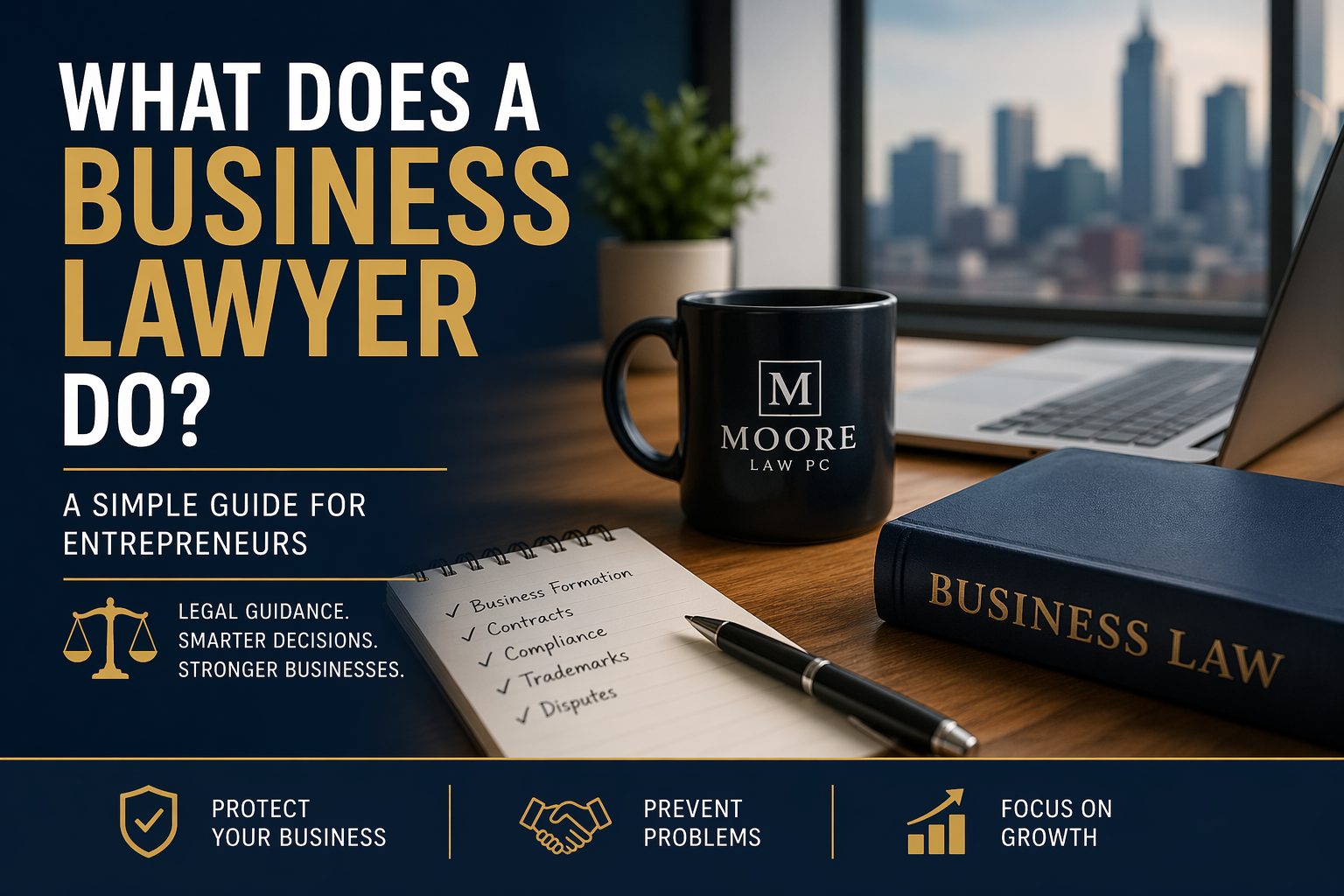
What does a business lawyer do – Nashville business attorney workspace with contracts, laptop, and legal guide

What Does a Business Lawyer Actually Do?

Starting a business is exciting—but legal mistakes early on can create expensive problems later. If you have ever wondered what a business lawyer does and whether you need one, this guide breaks it down in plain language.

Whether you are forming an LLC, launching a startup, or growing an established company, a business lawyer helps you make smart decisions, stay compliant, and protect what you are building.

Have questions about your business? Use the contact form on this page or call (615) 747-7467 to schedule your initial consultation.

What Is a Business Lawyer?

A business lawyer, also called a business attorney, helps individuals and companies handle legal issues related to starting, operating, and growing a business. The goal is to reduce risk, prevent avoidable problems, and help business owners move forward with confidence.

Instead of waiting until something goes wrong, many business owners work with a lawyer to make better decisions from the beginning.

What Does a Business Lawyer Actually Do?

1. Helps You Start Your Business the Right Way

One of the first decisions you will make is choosing a business structure. Should you form an LLC or a corporation? The answer depends on your goals, taxes, ownership plans, and risk level.

A business lawyer can help by:

  • Explaining your options in plain language
  • Recommending the right structure for your situation
  • Preparing and filing formation documents
  • Drafting operating agreements, bylaws, and other foundational records

Getting this part right can help protect your personal assets and create a stronger legal foundation for your business.

Not sure which structure fits your business? Reach out through the contact form or call (615) 747-7467 for an initial consultation.

2. Drafts and Reviews Contracts

Contracts are part of almost every business relationship. Clear agreements can prevent confusion, protect expectations, and reduce the chance of expensive disputes.

A business lawyer can:

  • Draft contracts tailored to your business
  • Review agreements before you sign
  • Negotiate stronger terms
  • Help protect your rights and limit unnecessary risk

Common examples include client agreements, vendor contracts, partnership agreements, licensing agreements, independent contractor agreements, and employment-related documents.

Before signing your next contract, contact Moore Law PC through this site or call (615) 747-7467 to get it reviewed.

3. Keeps Your Business Compliant

Business owners have to deal with ongoing legal requirements. Depending on the type of company, this may include registration issues, internal governance, employment policies, licensing, and state or federal compliance requirements.

A business lawyer helps you understand what applies to your company and what steps you need to take to stay on track.

  • State and federal compliance guidance
  • Business registrations and filings
  • Employment-related policies and procedures
  • Ongoing legal maintenance as your company grows

Avoid costly compliance issues—use the contact form or call (615) 747-7467 to schedule your consultation.

4. Protects Your Brand and Ideas

Your business name, branding, and original work can be some of your most valuable assets. A business lawyer can help you take steps to protect them.

  • Trademark registration
  • Brand protection strategy
  • Guidance on intellectual property issues
  • Help addressing misuse by competitors or others

Protecting your brand early can help you avoid conflicts and preserve the identity you are working hard to build.

Ready to protect your brand? Reach out through this page or call (615) 747-7467 to get started.

5. Helps Resolve Disputes

Even strong businesses can run into disagreements. These problems may involve partners, customers, vendors, employees, or other companies. A business lawyer helps you evaluate the issue, understand your options, and work toward a practical resolution.

This may include:

  • Demand letters and negotiation
  • Contract dispute analysis
  • Business tort and commercial dispute guidance
  • Litigation support when necessary

Dealing with a dispute? Contact Moore Law PC through the site or call (615) 747-7467 for guidance.

YouTube video

Do You Need a Business Lawyer?

Many business owners benefit from legal guidance long before there is a lawsuit or major problem. You may want to speak with a business lawyer if you are:

  • Starting a new business
  • Choosing between an LLC and a corporation
  • Entering into contracts
  • Bringing on a partner or investor
  • Hiring employees or contractors
  • Trying to protect a name, logo, or brand
  • Facing a business dispute
  • Planning for growth

Legal guidance is not just for emergencies. In many cases, it is one of the best ways to reduce risk and make better business decisions.

If you are unsure where to start, use the contact form or call (615) 747-7467 to schedule your initial consultation.

When Should You Hire a Business Lawyer?

The best time to hire a business lawyer is usually before you need one urgently. Working with a lawyer early can help you avoid common mistakes, save money over time, and build a stronger legal foundation.

Waiting until a problem becomes urgent often limits your options and increases the cost of fixing it.

Why Working with a Business Lawyer Matters

A business lawyer is not just someone to call when something goes wrong. The right lawyer can become a trusted advisor as your company grows, helping you make informed decisions, reduce legal exposure, and move forward with more confidence.

Start building your business on the right foundation—reach out through this page or call (615) 747-7467 today.

Start Your Business the Right Way

If you are ready to launch or strengthen your business, getting legal guidance early can make a real difference.

Use the contact form on this page or call (615) 747-7467 now to schedule your initial consultation.

Frequently Asked Questions

What does a business lawyer do in simple terms?

A business lawyer helps you start, run, and protect your business by handling legal matters such as formation, contracts, compliance, brand protection, and disputes.

Is a business lawyer necessary for an LLC?

A lawyer is not legally required to form an LLC, but working with one can help you choose the right structure, prepare proper documents, and avoid costly mistakes.

When should I hire a business attorney?

It is usually best to hire a business attorney before you sign important contracts, bring on partners, hire workers, launch a new venture, or face a dispute.

Can a business lawyer help with contracts?

Yes. A business lawyer can draft, review, revise, and negotiate contracts to help protect your interests and reduce the risk of future disputes.

Can a business lawyer help protect my brand?

Yes. Business lawyers often help with trademark registration, brand strategy, and other legal steps that protect the name and identity of your company.

About the Author — Nathan Moore, Attorney at Law

Nathan Moore is the founder of Moore Law PC, a business law firm based in Nashville, Tennessee. He has practiced law for more than twenty years, helping entrepreneurs and companies with trademark registration, business formation, contracts, and commercial disputes.

Have questions or need legal help? Use the contact form on this page or call (615) 747-7467 to schedule your initial consultation.


Read More
Attorney signing a cease and desist letter with Nashville skyline and Tennessee State Capitol in background representing business dispute resolution in Tennessee

How Do I Send a Cease and Desist Letter in Tennessee?

When someone is harming your business—whether through defamation, contract interference, intellectual property misuse, harassment, or unfair competition—you may not need to file a lawsuit right away. In many cases, the first step is sending a cease and desist letter.A properly drafted cease and desist letter can stop harmful behavior quickly, preserve evidence, and protect your legal position. But it must be done carefully. An aggressive or poorly written letter can escalate the situation or weaken your leverage.

What Is a Cease and Desist Letter?

A cease and desist letter is a formal written demand that someone stop specific conduct. It outlines:

  • What the person or business is doing
  • Why the conduct is unlawful or harmful
  • What action must stop
  • What will happen if it does not stop

It is not a lawsuit. It is a warning and an opportunity to resolve the issue before litigation becomes necessary.

When Should You Send One?

Tennessee business owners commonly use cease and desist letters in situations such as:

  • Breach of contract
  • Violation of a non-compete or non-solicitation agreement
  • Defamation or false statements harming a business
  • Trademark or brand misuse
  • Copyright infringement
  • Harassment or interference with business relationships

In many cases, a formal legal demand is enough to correct the behavior. Many individuals and companies do not want the expense or publicity of a lawsuit.

Step 1: Confirm You Have Legal Grounds

Before sending anything, make sure you actually have a legal basis for your claim. A cease and desist letter should rely on:

  • A valid contract
  • Established intellectual property rights
  • Documented defamatory statements
  • Clear evidence of harmful conduct

Sending a letter without legal support can backfire. In some situations, it could expose you to counterclaims.

Step 2: Clearly Describe the Conduct

The letter should identify exactly what conduct must stop. Vague accusations are ineffective. A strong letter:

  • Lists dates and specific actions
  • References relevant contract provisions or legal rights
  • Explains how the conduct is causing harm

Clarity increases credibility and reduces the chance of misinterpretation.

Step 3: State What You Want to Happen

Your demand should be direct. For example:

  • Immediately stop using a business name
  • Remove defamatory online posts
  • Comply with a non-compete agreement
  • Return confidential information

You may also include a deadline for compliance.

Step 4: Explain the Consequences

A cease and desist letter typically states that failure to comply may result in legal action. This may include:

  • Filing a lawsuit
  • Seeking injunctive relief
  • Claiming damages
  • Requesting attorney’s fees where allowed

The tone should be firm but professional. The goal is compliance, not escalation.

Should an Attorney Send It?

You can draft and send a cease and desist letter yourself. However, when an attorney sends the letter on firm letterhead, it often carries more weight.

More importantly, a lawyer can:

  • Evaluate the strength of your claim
  • Avoid accidental admissions
  • Prevent overstatements that could harm your position
  • Ensure the letter aligns with Tennessee law

In many cases, the cost of having it done properly is far less than the cost of fixing a poorly handled dispute.

What Happens After You Send It?

There are typically three possible outcomes:

  • The recipient complies.
  • The recipient responds and negotiates.
  • The recipient ignores the letter.

If the conduct continues, your next step may be filing a lawsuit or seeking a court order. The cease and desist letter can serve as evidence that you attempted to resolve the issue before litigation.

Common Mistakes to Avoid

  • Making threats you cannot legally support
  • Using emotional or inflammatory language
  • Sending the letter without reviewing contracts
  • Posting the dispute publicly online

Strategic restraint is often more effective than aggressive language.

Protect Your Business the Right Way

If someone is harming your business, you do not have to ignore it. A properly drafted cease and desist letter may resolve the issue quickly and protect your rights.

Call (615) 747-7467 for an initial free consultation, or message us through our website to discuss your situation.

Disclaimer: This article is for general informational purposes only and is not legal advice.

Read More

How Do I Respond to a Cease and Desist Letter?

Receiving a cease and desist letter can be intimidating and stressful, especially if you’ve never dealt with legal matters before. Whether it’s about copyright infringement, trademark disputes, defamation, or another legal issue, it’s important to handle the situation carefully to protect yourself and your business. In this blog post, we’ll break down what a cease and desist letter is, how to respond to it, and the steps you can take to resolve the situation in a way that minimizes legal risks.

What is a Cease and Desist Letter?

A cease and desist letter is a formal demand from an individual or a business asking you to stop a specific activity that they believe is infringing on their legal rights. It’s not a lawsuit, but rather a warning that legal action could be taken if you don’t comply. While the letter itself isn’t legally binding, it’s often the first step in the legal process, and ignoring it could lead to a lawsuit.

Common reasons for receiving a cease and desist letter include:

  • Trademark infringement: Using a name, logo, or slogan that someone else has trademarked.
  • Copyright infringement: Using someone’s content, such as images, music, or text, without permission.
  • Defamation: Making false statements about someone that harm their reputation.
  • Breach of contract: Violating the terms of a contract with another party.

Step-by-Step Guide to Responding to a Cease and Desist Letter

If you’ve received a cease and desist letter, it’s crucial to handle the situation carefully and thoughtfully. Here’s a step-by-step guide on how to respond:

1. Stay Calm and Don’t Ignore the Letter

The first thing to do is remain calm. Receiving a cease and desist letter doesn’t automatically mean you’re in the wrong or that a lawsuit is inevitable. It’s a legal notice, and how you respond can determine what happens next.

Most importantly, don’t ignore the letter. Ignoring a cease and desist can escalate the situation and increase the likelihood of the sender taking legal action. Responding promptly and professionally shows that you’re taking the matter seriously and willing to address any issues.

2. Review the Letter Carefully

Take the time to thoroughly read and understand the cease and desist letter. Look for the following key pieces of information:

  • The specific claims: What exactly are you being accused of? Is it trademark infringement, copyright infringement, defamation, or something else? The letter should clearly outline the allegations.
  • The demands: What actions are they asking you to take? Common demands include stopping the use of certain material, removing content, or ceasing a particular activity.
  • Deadlines: Many cease and desist letters include a deadline by which you’re expected to respond or comply with the demands. Make note of this and ensure you act within the given timeframe.
  • Legal grounds: The letter may reference specific laws, trademarks, copyrights, or other legal rights the sender claims you’ve violated. Understanding these references can help guide your response.

3. Assess the Validity of the Claims

Once you’ve reviewed the letter, it’s time to assess whether the claims being made are valid. In some cases, the sender may have a legitimate legal complaint, while in others, the claims might be overreaching or unfounded.

For example:

  • Trademark infringement: If you’re using a business name or logo that is confusingly similar to another company’s trademark, they may have a valid claim.
  • Copyright infringement: If you’ve used someone else’s creative work (photos, videos, text, etc.) without permission, they may have grounds for their claim.

However, sometimes cease and desist letters are sent without strong legal grounds or as a tactic to intimidate competition. It’s important to critically evaluate the claims made and determine whether you’ve actually violated any laws or rights.

4. Consult with an Attorney

If you’re unsure about the validity of the claims or how to respond, it’s always a good idea to consult with an attorney. A lawyer can help you understand your legal rights and obligations, assess whether the claims have merit, and guide you in crafting an appropriate response.

An attorney can also help you avoid common mistakes, such as admitting liability when you’re not actually at fault or responding in a way that escalates the situation. It is advisable to use an attorney in your response.

5. Consider Your Response Options

Depending on the situation, there are several ways you can respond to a cease and desist letter:

  • Comply with the demands: If the claims are valid and complying with the letter won’t harm your business or reputation, you may choose to stop the offending behavior. For example, if you unknowingly used a trademarked name for your business, you might agree to stop using it and rebrand.
  • Negotiate a resolution: If you want to maintain some of your rights or activities but are willing to compromise, you could negotiate a settlement with the sender. For example, you might offer to modify certain content rather than remove it entirely.
  • Challenge the claims: If you believe the claims are invalid or overreaching, you can challenge them in your response. This might involve explaining why your actions don’t violate the law or asserting your own legal rights (such as fair use in copyright cases). Your attorney can help you craft a strong response if you decide to dispute the claims.
  • Ignore the letter (not recommended): While you have the option to ignore the letter, this is generally not a good idea. Ignoring a cease and desist could lead to a lawsuit, which can be costly and time-consuming to defend against. It’s usually better to respond, even if it’s just to deny the claims.

6. Use Your Attorney To Draft a Professional Response

Once you’ve decided on your course of action, it’s time to draft a response. Your response should be professional, respectful, and clear, regardless of whether you’re agreeing to comply or disputing the claims. Here are some tips for crafting your response:

  • Acknowledge the letter: Begin by acknowledging that you’ve received the cease and desist letter. Even if you’re disputing the claims, it’s important to show that you’re taking the matter seriously.
  • State your position: Clearly outline your position regarding the claims. If you’re complying with the demands, state that you will take the requested action. If you’re disputing the claims, provide a clear explanation of why you believe the claims are invalid or unfounded.
  • Include any relevant evidence: If you have evidence supporting your position (such as proof of ownership of a trademark or permission to use copyrighted material), include this in your response.
  • Offer a resolution: If applicable, offer a resolution or compromise to avoid further escalation. This could involve modifying certain actions, removing specific content, or entering into a settlement agreement.
  • Request further clarification: If the cease and desist letter is vague or unclear, you can request further clarification of the claims and the legal basis for them.

7. Keep Records

Finally, be sure to keep copies of all correspondence related to the cease and desist letter. This includes the original letter, your response, and any follow-up communications. Keeping detailed records can help you protect yourself if the situation escalates into a legal dispute.

Final Thoughts

Receiving a cease and desist letter can be stressful, but it’s important to respond thoughtfully and professionally. Start by carefully reviewing the letter and assessing the validity of the claims. Consulting with an attorney is often the best way to ensure you’re responding correctly and protecting your legal rights.

Whether you decide to comply with the demands, negotiate a resolution, or challenge the claims, how you handle the situation can make all the difference in avoiding costly legal battles and maintaining a positive reputation for your business.

Have you received a cease and desist letter? Do you need to send one to a violator? If so, contact us for your free business consultation. We will find the best path forward for your company!


Read More